USA: +1 415 256 4347
  Sign in

| 1- The project about healthcare in the UK.I uploaded 1- project template (plan)2- a project example that help you to write the same example as well ( same structure ).3- References should up to date and academic ( books & journals ) you can use scholar google. |
Answer
Healthcare and Financial Challenges in the UK
Contents
2. Factors contributing to financial challenges in the UK healthcare sector. 4
2.2.1 Increased spending in chronic diseases. 6
2.2.2 Pay for performance and its shortcomings. 7
2.2.3. Adoption of expensive HIT systems: Are they needed?. 9
2.3. Evaluation & Analysis of key information. 10
1. Introduction
In the United Kingdom, the healthcare sector has been heavily affected by financial challenges. The cost of healthcare continues to rise at an alarming rate. There are a number of reasons for the rising healthcare costs, some of which include an increase in spending on chronic conditions, lack of cost-efficiency, and the adoption of extremely expensive medical technologies. For example, during the 2009-2010 financial year, the NHS (National Health Service) spent about £1.44 billion on the management of chronic kidney disease alone (Kerr et al., 2012). Thus, the financial burden being imposed on the healthcare system by chronic diseases such as kidney disease, stroke, and cardiovascular complications is enormous.
Like other countries, the United Kingdom is facing the problem of promoting cost efficiency in healthcare, leading to financial challenges. Financial challenges have led to a reduction in public funding of healthcare as well as growing emphasis on performance measurement. In turn, this move has forced managers of healthcare facilities to rationalize the way resources are utilized by adopting management tools being used in the private sector such as pay for performance. There is also a major problem with the way information on healthcare cost is reported and utilized. Consequently, different hospitals have tended to report different costs. In terms of technology, the UK government has already set up the NPfIT (National Program for Information Technology), which is the world’s most expensive health information technology system (Anderson et al., 2006). The objective of establishing this system is to integrate electronic appointment, care record service, and prescription transmission systems.
Meanwhile, it seems that most of the financial problems affecting the health sector in the UK may be attributed to the introduction of pay for performance schemes. These schemes offer financial incentives to health care providers to enable them to improve health outcomes. Unfortunately, they have produced mixed results. This is disappointing because the incentives that are being provided through this approach seem to be having no significant impact on the practice of medicine. Even in situations where those incentives change practice, outcomes fail to improve. A number of factors may have contributed to this problem, including emphasis on profitability and the impossibility of quantifying certain outcomes in healthcare.
The paper address three main policies that are thought to have contributed to the current financial challenges that continue to affect the health care sector in the UK. These variables include increased spending in chronic diseases, the introduction of pay for performance schemes, and the establishment of expensive HIT systems. This paper’s thesis is that these policies have failed to improve care outcomes, thereby leading to rising healthcare costs.
2. Factors contributing to financial challenges in the UK healthcare sector
2.1 Overview
Increased spending in chronic conditions has greatly contributed to the rising cost of healthcare in the UK. The current financial problems have also been contributed to by funding, emphasis on performance measurement and new management tools derived from public sector such as pay for performance. Similarly, the adoption of expensive medical technologies and systems has greatly contributed to the rising healthcare costs. These challenges need to be addressed in order to make medical care affordable to all UK citizens.
2.2 Main Ideas
As the UK population continues to age, the prevalence of chronic conditions has increased. One example is the chronic kidney disease, whose prevalence rate in the UK ranges between 6 and 8.5 percent of all adults (Kerr et al., 2012). As the financial cost of these diseases continues to grow, policymakers in the healthcare sector are under increasing pressure to reduce cost growth by promoting efficiency in the way NHS resources are utilized.
On the other hand, many people in the UK are disappointed that the pay for performance initiative did not yield the desired results in terms of reducing the growth of healthcare costs. Although the program has triggered change of behavior in terms of clinical practice, it has turned out to be a very costly undertaking. Every year, the UK government spends about £1bn on pay for performance programs (Maynard & Bloor, 2010). Additionally, this behavior change has not necessarily led to better health outcomes. Indeed, the relationship between the performance targets identified under pay for performance and population health improvements has been a highly controversial subject. Some people argue that pay for performance should be done away with because it only contributes to rising healthcare costs. Others claim that it will contribute to a slowing down of the current growth in healthcare cost.
Regarding the adoption of expensive health information technology systems, a major concern is that they are too expensive. Questions have been raised on whether the objectives that these systems help the country achieve can be met in other less expensive approaches. Another point that is being raised is that it may be counterproductive for general practitioners to come up with their own health IT systems that run parallel to government-operated systems. Some of the main factors that have contributed to the development of these systems include clinician choice, technological developments, integration into existing clinical tasks, and organizational factors. It is unfortunate that the cost factor is not being given the prominence it deserved as a determinant of technological developments in the health care sector.
2.2.1 Increased spending in chronic diseases
Research indicates that the financial impact of managing chronic conditions is large, and the UK government must come up with ingenious ways of addressing this challenge. One of the reasons why this problem remains unresolved is that detailed cost estimates for these chronic conditions are lacking. For this reason, it has become virtually impossible for authorities in the health care sector to analyze the cost-effectiveness of various treatment programs. By creating an environment that promotes analysis of treatment approaches, the UK government can succeed in adopting clinical practices that bring about greater efficiency and better outcomes at a lower cost.
For the right cost estimates to be arrived at, the underlying data sources must be of high quality. Similarly, policymakers in the health care industry must make appropriate assumptions in generating an economic model on which the financing of programs aimed at managing chronic conditions is to be anchored. In developing such a model, focus should be on the dynamics of both the operations of the NHS and the contemporary practices being used to treat the chronic conditions. However, due to the absence of epidemiological studies as well as sources of data that can be used for the mapping of both cost and practice issues relating to these conditions, it becomes difficult to identify the most effective cost-cutting measures and mechanisms for implementing them.
The rising costs arising from the special medical needs of the aging population have far-reaching implications for the care outcomes delivered by healthcare organizations. These organizations are under growing pressure to plan their services strategically to prepare for the projected increase in the aging population (See Appendix 2). Unfortunately, such an undertaking involves the utilization of more financial resources. With the budget freezes that have started to be implemented by the UK government, it has become difficult for these organizations to secure government funding in the form of incentives.
With the expectation that future healthcare costs for the aging population will increase, the UK government must put in place radical measures aimed at improving the health status of this vulnerable demographic group (Caley & Sidhu, 2010). One of them is the provision of preventative care. Preventative care has been proven to be an excellent long-term of cost-reduction and outcome-improvement strategy in the health care industry for both younger and older individuals (Caley & Sidhu, 2010). Another important measure is to develop a health costing methodology that puts into consideration the projected cost burden associated with end of life care. Overestimating or underestimating costs in this regard can have a negative impact on health care expenditure. Moreover, policymakers should come with a viable prediction on future demand and its impact on costs of care particularly within the NHS. The need for the immediate implementation of these measures are justified by the current situation where over-simplistic assumptions are being made even in the presence of well-established principles of health care costing. Moreover, adopting these measures can potentially have far-reaching organizational consequences through medium- and long-term strategic planning.
2.2.2 Pay for performance and its shortcomings
Pay for performance is associated with inefficiency in the UK health sector. At the same time, not much is known about the actual benefits that have accrued from the introduction of these programs. It seems that UK authorities have reached a point of resorting to blind optimism after failing in their efforts to slow down rising health care costs. Some studies show performance improvement in hospitals that have applied pay for performance programs (Lindenauer et al., 2007) while others create a glim picture as far as the role of these incentives in the achievement of overall cost-effectiveness is concerned (Maynard & Bloor, 2010). However, even in situations where these incentives appear beneficial, the resulting quality improvements reported in terms of hospital care tend to be modest at best (Lindenauer et al., 2007). Optimism regarding the effectiveness of pay for performance schemes in the UK may have been heavily influenced by the remarkable success that they have contributed to in the United States.
Since their introduction in the UK in 2004, pay for performance programs numerous efforts have been made to determine whether they contribute to cost reduction and enhanced quality of care. A major observation that one can make out of these efforts is that the programs can be effective but such an achievement is yet to be made in the UK. Majority of the hospitals operating the programs tend to suffer from inefficiency and rising costs. Moreover, in situations where some benefits are realized, they tend to be too context-dependent. More importantly, pay-for-performance incentives have tended to trigger unintended consequences across the UK health sector. Consequently, numerous unanswered questions regarding the best way of introducing these programs have been raised. It seems that the best way to answer them is to examine the key design areas that have contributed to the success of some programs and not others.
One major problem with pay for performance incentives is that they only reward measurable attributes. For this reason, most doctors have tended to focus too much on certain variables, not because they matter but because they will be measured. In one program in the UK, adverse effects were observed in terms of quality of care simply because the medical conditions in questions were not incorporated into the incentive program (Roland & Campbell, 2014). Such challenges cannot avoided whenever policymakers decide focus their attention on some conditions while all but neglecting others. Failure to treat all conditions equally in terms of the professional attention given to them may create undesirable situations where doctors become overly interested in conditions that have the greatest potential in terms of care outcomes. The resulting inefficiency may be said to have contributing to the financial problems affecting the UK health sector. When a high number of patients end up incurring huge costs through alternative treatment options yet the existing system has been equipped with numerous highly effective systems that are not being optimally used, that amounts to wastage. A country that continues to allow that kind of wastage to go on for over a decade, like the UK has, is bound plunge its health care system deep into financial challenges.
The link between pay for performance and financial problems in the UK health sector may become more direct when one puts into consideration how difficult it is to ensure that an increase in the size of incentive payments triggers a corresponding increase in outcomes. Psychological research shows that large incentives (financial or otherwise) for tasks that require greater cognition levels tend to lead to a lower level of achievement (Gillam, Siriwardena & Steel, 2012). Research should be undertaken to determine the applicability of this finding in the implementation of pay for performance within the UK health sector. Indications are that the current financial challenges may be attributed to increased allocation of incentives in the most challenging areas of patient care without necessarily getting corresponding value for money in the form of improved outcomes (Walker et al., 2010).
2.2.3. Adoption of expensive HIT systems: Are they needed?
The expensive HIT systems that the UK government has introduced seem to have contributed to the financial challenges being experienced in the country’s health sector today. Although research evidence indicates that health information technologies can greatly contribute to improvement in quality and efficacy, it remains unclear whether the costs involved are worth the benefits (Chaudhry et al., 2006). When this uncertainty is evaluated in the context of the massive financial resources required to install efficient HIT systems, one gets the impression that it may be have been better for the UK government to consider implementing alternative methods of promoting quality and efficiency in order to avoid compromising financial stability in the sector in the short and medium terms (De Lusignan & Chan, 2008).
While looking at lower-cost alternatives, health sector policymakers may need to look into aspects of multifunctional operation of HIT systems as well as their contribution to cost reduction in benchmark research institutions. It may have been possible for better cost implications to be realized if the comprehensive HIT system being used in the UK health sector today was adopted after a thorough assessment of the effectiveness of commercially developed systems to promote cost reduction across multifunctional areas. As policymakers in the sector search for answers on the way forward, they may need to consider looking for ways in which aspects of interoperability can be enhanced as a way of ensuring that the HIT system begins to contribute to quality and efficiency at lower costs (De Lusignan & Chan, 2008).
2.3. Evaluation & Analysis of key information
Based on this analysis, it is evident that the UK health system is facing serious financial challenges. To begin with, increased spending in chronic diseases has exerted tremendous pressure on available financial resources. One way to address this problem is to focus on preventative care. Preventative care can be a solution to rising health costs due to chronic conditions affecting the aging population. Another solution, is to avoid overestimation and underestimation of costs of care for the aging population. Policymakers should come with a viable prediction on future demand and its impact on costs of care particularly within the NHS.
Another major source of inefficiency in the health system is the use of performance measurements such as pay for performance programs. Research should be undertaken to determine a lower level of achievement is being made after the introduction of large financial incentives through pay for performance programs. If this is found to be the case, policymakers should abandon the existing approach that allocates incentives based primarily on difficulty and complexity, thereby neglecting other crucial metrics. Pay for performance programs should be redesigned to prevent unintended consequences such as growing focus on what is measurable at the expense of what is important.
The adoption of expensive HIT systems has also contributed to the financial challenges affecting the country’s health sector. This situation has manifested itself mainly through the problem of interoperability across multifunctional areas. A viable solution to this problem may involve making efforts to enhance interoperability. This will hopefully promote quality and efficiency at a reduced cost, thereby easing the current financial burden the sector is grappling with today.
3. Conclusion
The UK health sector has undergone numerous changes in recent times, and numerous achievements have been made in the process. Unfortunately, these activities have led to a rapid increase in healthcare spending, thereby plunging the sector into serious financial challenges. The systematic analysis presented in this project has shown that policymakers in the sector should focus on three key areas in their efforts to slow down cost growth while at the same time enhancing efficiency and quality of care. These areas include increased spending in chronic diseases, the implementation of pay for performance schemes, and the adoption of expensive HIT systems. It is imperative for policy thinking in these three areas to be reoriented with a view to align it with the prevailing financial realities.
4. References
Anderson, G., Frogner, B., Johns, R. & Reinhardt, U. (2006). Health Care Spending and Use of Information Technology in OECD Countries. Health Affairs, 25(3), 819-831.
Caley, M. & Sidhu, K. (2010). Estimating the future healthcare costs of an aging population in the UK: Expansion of morbidity and the need for preventative care. Journal of Public Health, 4(1), 1–6.
Chaudhry, B., Wang, J., Wu, S., Maglione, M., Mojica, W., Roth, E., Morton, S. & Shekelle, P. (2006). Systematic Review: Impact of Health Information Technology on Quality, Efficiency, and Costs of Medical Care. Annals of Internal Medicine, 144(10), 742-753.
De Lusignan, S. & Chan, T. (2008). The Development of Primary Care Information Technology in the United Kingdom. Journal of Ambulatory Care Management, 31(3), 201–210.
Gillam, S., Siriwardena, A. & Steel, N. (2012). Pay-for-Performance in the United Kingdom: Impact of the Quality and Outcomes Framework—A Systematic Review. Annals of Family Medicine, 10(5), 461-468
Kerr, M., Bray, B., Medcalf, J., O’Donoghue, D. & Matthews, B. (2012). Estimating the financial cost of chronic kidney disease to the NHS in England. Nephrology Dialysis Transplantation, 3, 1–8
Lindenauer, P., Remus, D., Roman, S., Rothberg, M., Benjamin, E. & Bratzler, D. (2007). Public Reporting and Pay for Performance in Hospital Quality Improvement. New England Journal of Medicine, 356, 486-96.
Maynard, A & Bloor, K. (2010). Will financial incentives and penalties improve hospital care? British Medical Journal, 340, 297-298.
Roland, M. & Campbell, S. (2014). Successes and Failures of Pay for Performance in the United Kingdom. New England Journal of Medicine, 370(20), 1844-1949.
Walker, S., Mason, A., Claxton, K., Cookson, R., Fenwick, E., Fleetcroft, R. & Sculpher, M. (2010). Value for money and the Quality and Outcomes Framework in primary care in the UK NHS. British Journal of General Practice, 2(3), 213-220.
5. Appendices
Appendix 1: A table showing estimated on one of the chronic conditions affecting UK citizens: chronic kidney disease during the 2009-2010 financial year, specifically dialysis costs (Source: Kerr et al., 2012).
Appendix 2: Estimates on health costs per annum based on projected growth in aging population within the West Midlands region (Source: Caley & Sidhu, 2010).
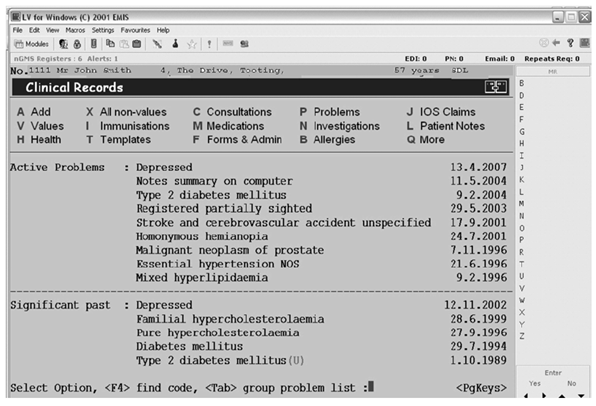
Appendix 3: An example of the comprehensive HIT systems being used in the UK health sector today (Source: De Lusignan & Chan, 2008).